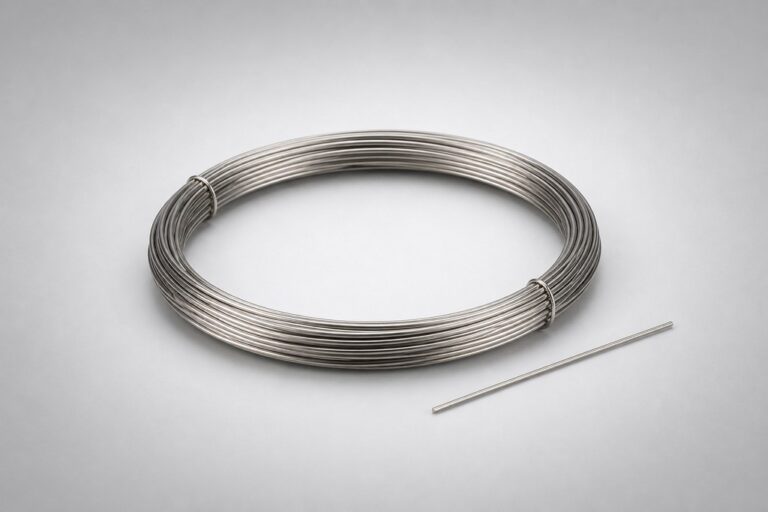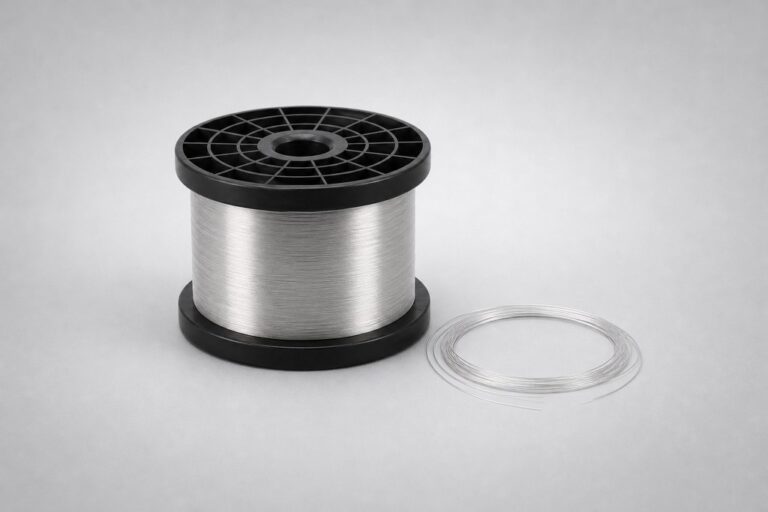




Fil de Niobium
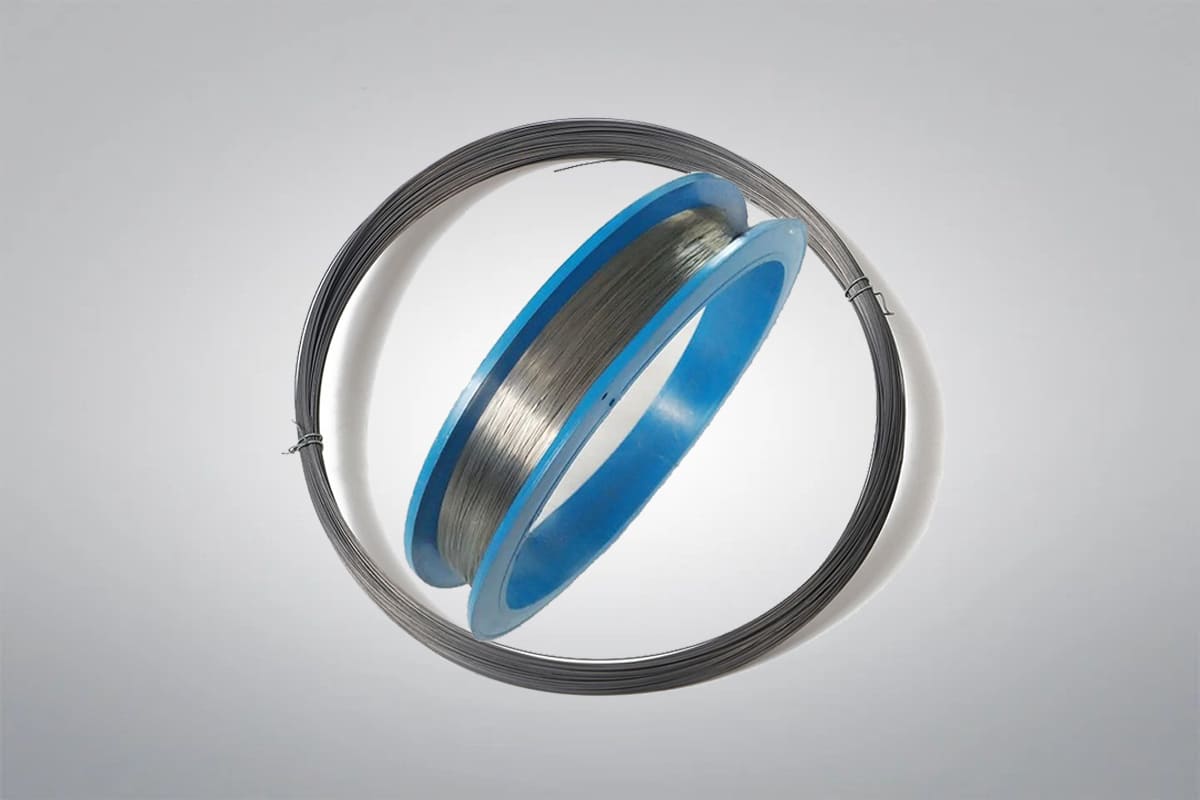
Fil de Niobium
Norme : ASTM B392
Pureté : 99,5%-99,99%
Le fil de niobium est tréfilé à partir de barres de niobium de haute pureté, qui se caractérisent par une excellente résistance mécanique, une résistance aux hautes températures, une résistance à la corrosion et de bonnes propriétés supraconductrices. Nous pouvons fournir du fil de niobium sous forme de fil droit, en bobine ou en rouleau. En tant que fournisseur et fabricant de premier plan de produits en niobium haut de gamme, Heeger Metal s'appuie sur des centres d'usinage de pointe pour fournir du fil de niobium de haute précision destiné à un large éventail d'applications.
Ou envoyez-nous un courriel à l'adresse suivante max@heegermaterials.com.
Fiche technique du fil de niobium
| Référence : | HMNB1103 |
|---|---|
| Dimensions : | Diamètre : 0,25-3 mm Durée : TBD (To Be Determined) (à déterminer) |
| Standard : | ASTM B392, ASTM B655/B655M |
| Matériau : | RO4200, RO4210, RO4251, RO4261, RO4295 |
| Type : | Droit, en rouleau ou en bobine |
| La pureté : | 99.5%-99.99% |
| Densité : | 8,57 g/cm3 |
| Point de fusion : | 2468 ℃ |
| Tempérer : | Recuit ou non recuit |
Fil de Niobium
Niobium est un métal de transition rare, de couleur gris argenté, qui présente une excellente résistance à la corrosion et une grande solidité à haute température. Il est largement utilisé dans l'aérospatiale, l'énergie nucléaire, la technologie supraconductrice et l'industrie chimique. Il est idéal pour la production de matériaux supraconducteurs en raison de sa température de transition supraconductrice élevée. HM peut fournir des fils de niobium de haute qualité dans une large gamme de diamètres. Des solutions personnalisées sont disponibles en fonction des besoins spécifiques.

Fil de niobium - Fil droit Fil de niobium - Fil enroulé Fil de niobium - Fil mélangé
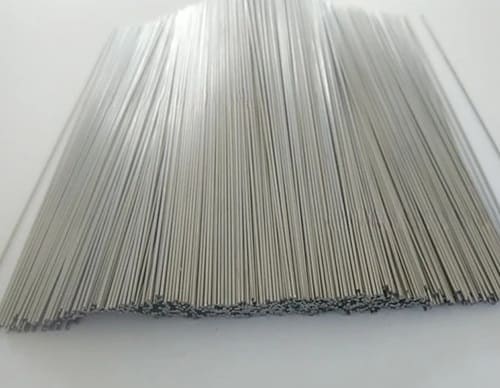
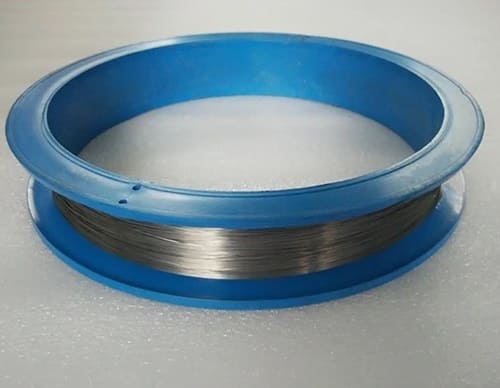
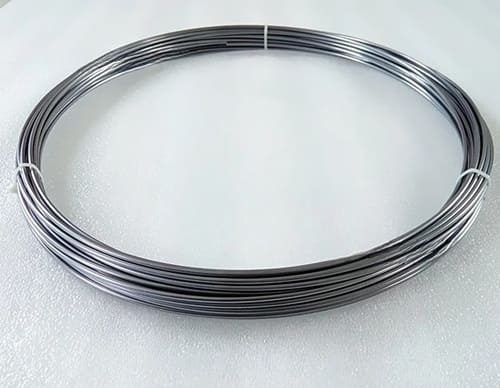
Composition chimique du fil de niobium
| Matériau | Élément principal (%) | Impuretés (≤%) | ||||||||||||
|---|---|---|---|---|---|---|---|---|---|---|---|---|---|---|
| Nb | Fe | Si | Ni | W | Mo | Ti | Ta | Zr | Hf | O | C | H | N | |
| RO4200 | Bal. | 0.0040 | 0.0040 | 0.0020 | 0.0050 | 0.0050 | 0.0020 | 0.0700 | 0.0200 | 0.0200 | 0.0150 | 0.0040 | 0.0015 | 0.0030 |
| RO4210 | Bal. | 0.0100 | 0.0100 | 0.0050 | 0.0200 | 0.0100 | 0.0040 | 0.1000 | 0.0200 | 0.0200 | 0.0200 | 0.0100 | 0.0015 | 0.0100 |
| RO4251 | Bal. | 0.0050 | 0.0050 | 0.0050 | 0.0300 | 0.0100 | 0.0200 | 0.1000 | 0.8-1.2 | 0.0200 | 0.0150 | 0.0100 | 0.0015 | 0.0100 |
| RO4261 | Bal. | 0.0500 | 0.0050 | 0.0050 | 0.0500 | 0.0500 | 0.0300 | 0.5000 | 0.8-1.2 | 0.0200 | 0.0250 | 0.0100 | 0.0015 | 0.0100 |
| RO4295 (ASTM B655/B655M) | Bal. | - | - | - | 0.5000 | - | 0.7-1.3 | 0.5000 | 0.700 | 9-11 | 0.0250 | 0.0150 | 0.0015 | 0.0100 |
Propriétés mécaniques du fil de niobium
| Grade | Résistance à la traction psi(MPa), ≥ | Limite d'élasticité δ0.2, psi (MPa),≥ | Allongement en 1″/2″ de la longueur de la jauge, %, ≥ | |
|---|---|---|---|---|
| >=0.010 | <0.010 | |||
| RO4200, RO4210 | 18000 (125) | 12000 (85) | 25 | 20 |
Processus de production du fil de niobium
- Matières premières: Sélectionnez des produits de haute pureté poudre de niobium.
- Métallurgie des poudres: Mélanger avec le liant et compacter en une billette verte.
- Frittage: Frittage à haute température pour éliminer le liant et augmenter la densité.
- Dessin: Dessiner la tige pour obtenir la taille et la finition souhaitées.
- Traitement thermique: Recuit pour réduire les tensions et améliorer les propriétés.
- Traitement de surface: Nettoyer et polir la surface.
- Découpe et personnalisation: Couper ou personnaliser selon les besoins.
Méthode de traitement des fils de niobium
- Frittage
- Forgeage
- Forgeage rotatif
- Roulant
- Polissage
Fil de niobium Finition de surface
En fonction des applications prévues, tubes en niobium et les tuyaux présentent les trois principaux états de surface suivants :
- Noir: La surface est “telle que sertie” ou “telle qu'étirée”, conservant une couche de lubrifiants et d'oxydes de traitement.
- Nettoyé: La surface est nettoyée chimiquement pour éliminer tous les lubrifiants et oxydes.
Applications du fil de niobium
- Matériaux supraconducteurs: Les fils de niobium sont largement utilisés dans le domaine de la supraconductivité et sont couramment utilisés pour produire des câbles supraconducteurs, des aimants supraconducteurs et d'autres dispositifs, en particulier dans les pédales de gaz à particules et les instruments de résonance magnétique nucléaire (RMN).
- Industrie nucléaire: Les fils de niobium sont couramment utilisés comme matériaux structurels dans les réacteurs nucléaires et comme matériaux pour les gaines de combustible nucléaire en raison de leur faible section efficace de capture des neutrons et de leur grande résistance à la corrosion.
- Aérospatiale: En raison de son excellente résistance aux températures élevées et à la chaleur, le fil de niobium est souvent utilisé pour fabriquer des composants à haute température, tels que les composants des moteurs de fusées et d'avions.
- Composants électroniques: Les fils de niobium sont utilisés comme matériaux résistant à la corrosion des acides et des métaux liquides dans la fabrication de chaudières, d'appareils de chauffage et d'autres équipements.
- Industrie chimique: Les fils de niobium sont utilisés comme matériaux résistant à la corrosion par les acides et les métaux liquides pour les chaudières, les appareils de chauffage et d'autres équipements.
Emballage du fil de niobium
Le fil de niobium est soigneusement placé dans des caisses en bois ou des cartons avec un support supplémentaire en matériaux souples pour éviter tout déplacement pendant le transport. Cette méthode d'emballage garantit l'intégrité des produits tout au long du processus de livraison.
Propriétés du Niobium
Télécharger
Obtenir un devis
Nous vérifierons et vous contacterons dans les 24 heures.
Autres produits en fil métallique
Nous sommes spécialisés dans la fourniture de fils personnalisés de haute qualité, y compris des fils droits, des fils enroulés et des fils pour pulvérisation thermique. Nous proposons différents matériaux tels que le tungstène, le molybdène, les alliages de nickel et bien d'autres encore, garantissant précision et performance pour diverses applications industrielles. Que vous ayez besoin de fils pour la fabrication, le revêtement ou les revêtements spécialisés comme la pulvérisation thermique, nos solutions de fils sur mesure sont conçues pour répondre à vos besoins spécifiques avec une résistance et une fiabilité supérieures.
Autres produits à base de niobium
Heeger Metal propose une gamme complète de produits à base de niobium et d'alliages de niobium, y compris des poudres et des pièces finies, avec des options de personnalisation disponibles. Connus pour leur solidité exceptionnelle, leur résistance à la corrosion et leur stabilité à haute température, ces matériaux sont idéaux pour l'aérospatiale, l'électronique et les applications de traitement chimique. Notre niobium de haute pureté garantit des performances et une durabilité fiables dans les environnements les plus exigeants.